
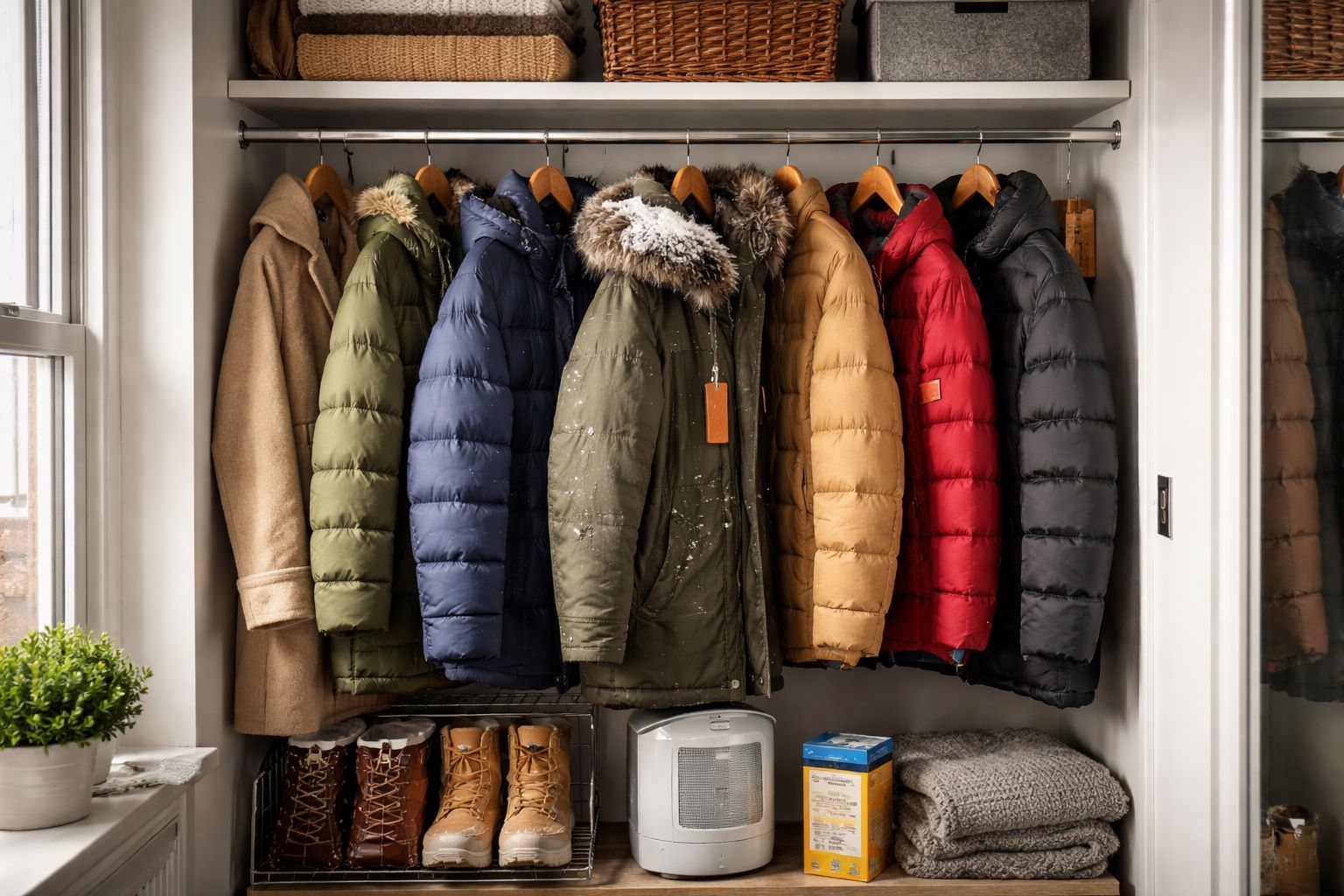
Why winter coats smell like mildew in New York City
New York City winters are tough, not just on people, but on clothing, too. Understanding why winter coats develop mildew smells is the first step in preventing it. NYC apartment humidity and poor ventilation Many NYC apartments, especially older walk-ups and pre-war buildings, lack proper ventilation. When damp coats are hung in tight closets with little airflow, moisture gets trapped. That damp environment is exactly what mildew needs to grow. Radiator heat, steam, and moisture traps Radiators, steam pipes, and long hot showers raise indoor humidity levels. Add snow, sleet, or rain from your daily commute, and your coat becomes a moisture sponge. Common storage mistakes in small spaces Limited closet space often leads to overcrowding. When coats are pressed tightly together, they can’t dry properly, increasing the risk of mildew odors.Always dry your coat completely before storing it.
One of the most effective ways to prevent your winter coats from smelling like mildew is to ensure they are completely dry before hanging them up. The science behind moisture and mildew Mildew thrives in dark, damp environments. Even slightly wet fabric, especially wool or down, can start to smell within hours if stored improperly. Best drying practices for NYC apartments After coming home from the snow or rain:- Shake off excess moisture
- Hang coats near (but not on) a heat source
- Leave them out in the open air for several hours
- Air-drying is safest for wool and structured coats
- Machine drying (low heat) works for many synthetic or down coats; always check the label
Improve air circulation in closets
Closets are often the biggest culprit when it comes to mildew smells. Why do closets become mildew hotspots? Darkness, warmth, and stagnant air create the perfect breeding ground for odor-causing bacteria and mildew. Simple airflow hacks for small nyc closets- Avoid overstuffing
- Leave space between coats
- Keep closet doors open whenever possible
Use natural odor absorbers
Natural solutions are affordable, safe, and apartment-friendly. Baking soda, activated charcoal, and cedar- Baking soda: Absorbs odors effectively
- Activated charcoal: Ideal for high-humidity spaces
- Cedar blocks: Absorb moisture and repel pests
Clean coats more often
City life adds extra grime to winter coats. Dirt, sweat, and city grime are odor triggers Subway air, street pollution, and body oils all cling to coat fibers. When combined with moisture, odors intensify. How often to clean wool, down, and synthetic coats- Wool coats: Once or twice per season
- Down coats: Every 1–2 months during heavy use
- Synthetic coats: Monthly or as needed
Store coats the right way at season’s end
Improper off-season storage is a major reason coats smell bad next winter. Breathable garment bags vs plastic covers Plastic traps moisture. Opt for breathable cotton garment bags instead. Best long-term storage tips for NYC apartments- Clean coats before storing
- Add moisture absorbers
- Store in a cool, dry place away from radiators
Common mistakes NYC residents make with winter coats
- Hanging wet coats immediately after coming home
- Using plastic garment covers
- Overcrowding closets
- Ignoring humidity levels
FAQs about mildew smells in winter coats
- Why does my coat smell even after it dries? Odors often come from trapped bacteria and mildew deep in the fabric.
- Can mildew smells be harmful? Yes, prolonged exposure can irritate allergies and the respiratory system.
- Do dryer sheets remove mildew smells? They mask odors but don’t remove the root cause.
- Is vinegar safe for winter coats? Yes, diluted vinegar can neutralize odors on many fabrics.
- Should I worry about mold in my closet? If odors persist, it’s worth checking for hidden moisture issues.
- What’s the fastest fix for a smelly coat? Air it out immediately and use activated charcoal overnight.